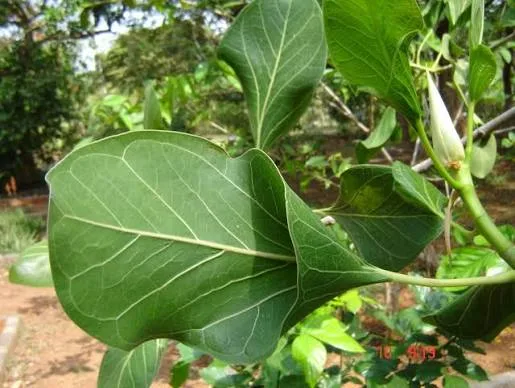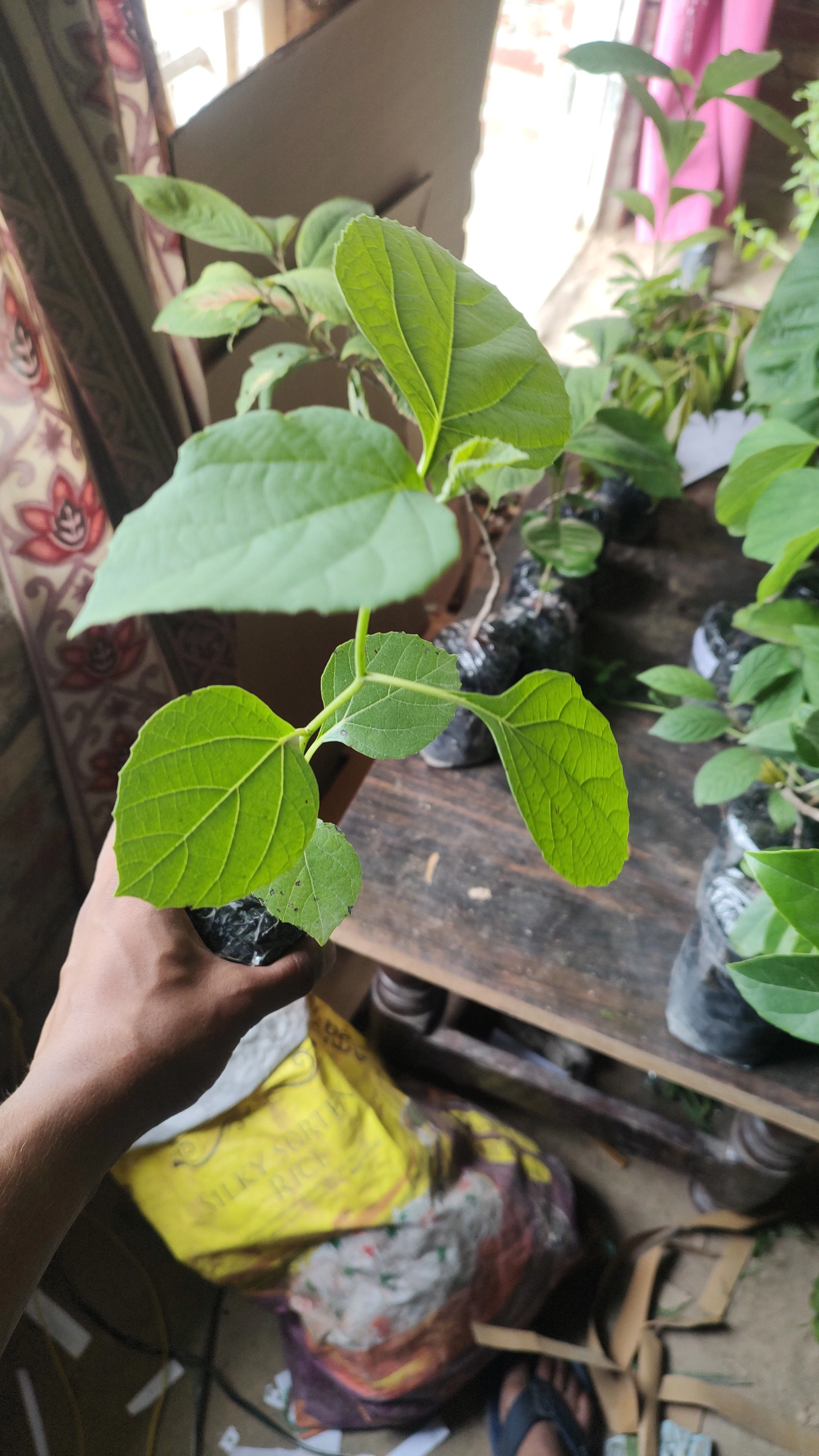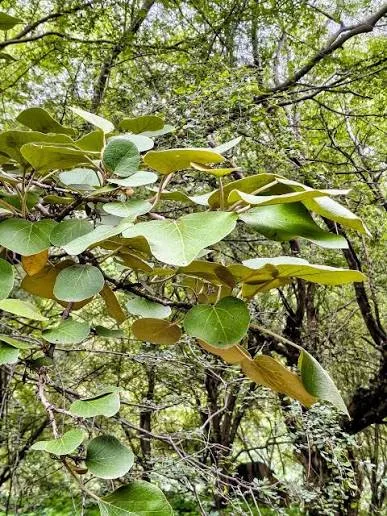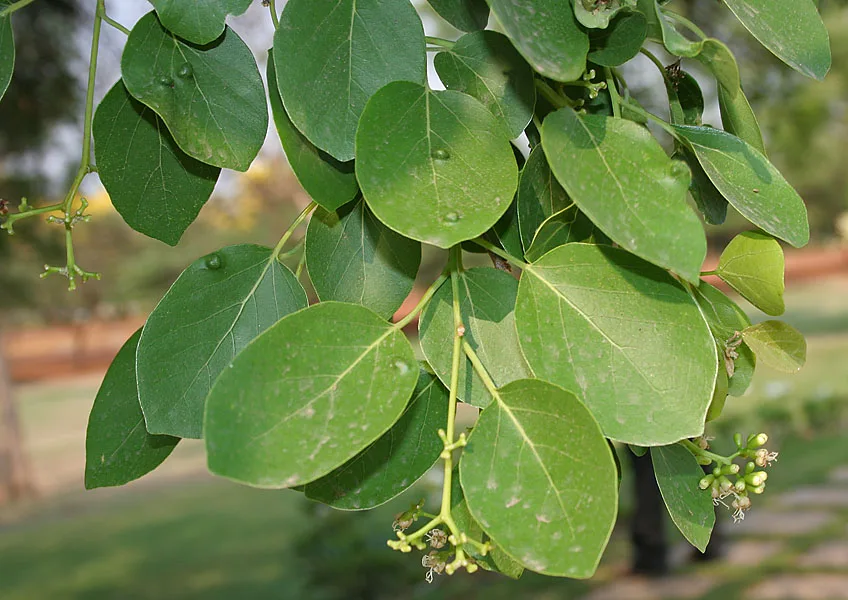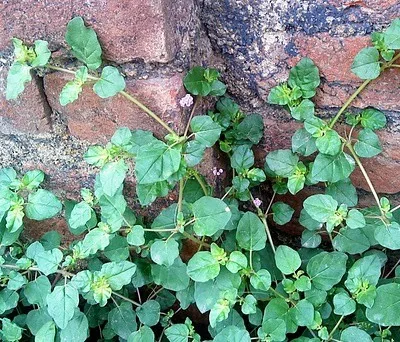
- Stems & Habit: Slender, prostrate, purple-tinged or green branching stems spreading outward from a thick, woody rootstock.
- Foliage: Thick, small, opposite leaves that are broadly ovate or elliptic, smooth dark green on top, and often whitish or silvery underneath.
- Flowers: Minute, umbrella-like clusters of tiny pink, purplish, or white flowers blooming at branch tips.
- Roots: Thick, cylindrical, tuberous taproots that possess the highest concentration of active medicinal compounds (punarnavine).
Prostrate, sprawling perennial herb with branching stems
Punarnava (Spreading Hogweed / Hogweed) (Shothaghni / पुनर्नवा (Punarnava))
Boerhavia diffusa L.
Also Known as: पुनर्नवा (Punarnava), गदहपुरा (Gadahpura), रक्त पुनर्नवा, Shothaghni, Spreading Hogweed
Boerhavia diffusa, universally known as Punarnava (meaning 'one that renews the body'), is a prostrate, perennial herb native to India and tropical regions worldwide. Celebrated in Ayurveda for its remarkable rejuvenative, diuretic, and anti-inflammatory properties, it has deep roots in traditional medicine for supporting kidney health, fluid balance, liver detoxification, and overall cellular revitalization.
Botanical Family
Nyctaginaceae
Native Region
Indian Subcontinent, tropical Asia, Africa, and Americas
Growth Habit
Prostrate, sprawling perennial herb with branching stems
Mature Height
Low-lying ground cover spreading horizontally up to 1 meter; stems rise 20–40 cm
Sunlight
Full Sun (requires 6+ hours of direct sunlight for optimal root and leaf development)
Water Needs
Low to Moderate (thrives in dry conditions once established; sensitive to waterlogging)
Soil Dynamics
Well-draining sandy loam, gravelly, or dry garden soil; pH 6.0 – 7.5 (highly drought-tolerant)
Propagation
Seeds and stem cuttings