Does Raat Ki Rani Attract Snakes? The Real Truth & 4 Safety Rules
Does Raat Ki Rani attract snakes? Really!
No, snakes are not attracted to the scent or flowers of Raat Ki Rani (Cestrum nocturnum). Because snakes are strict carnivores, they have no biological interest in plant nectar or fragrance. However, the night fragrance attracts moths and insects, which in turn draw frogs, lizards, and rodents that snakes hunt for food.
By Mahesh K. Kushwaha••Updated Sep 19, 2026•3 min read
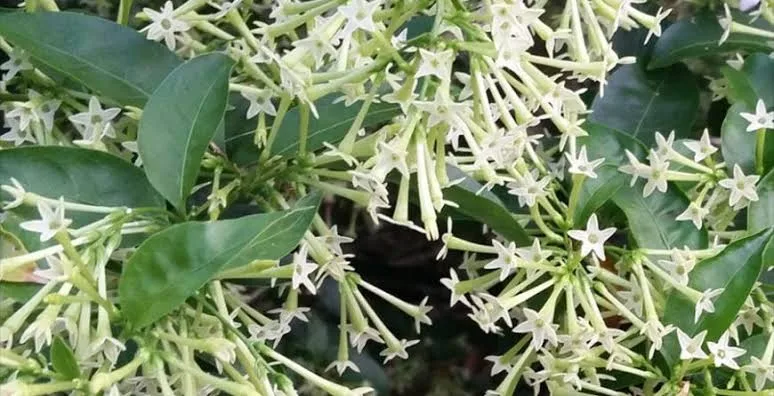
Raat Ki Rani (Cestrum nocturnum), known universally as Night-Blooming Jasmine, Queen of the Night, or रात की रानी, is one of the most intoxicatingly fragrant ornamental shrubs cultivated across South Asia. Its pale greenish-white tubular blossoms open exclusively after dusk, filling entire neighborhoods with an intense, sweet fragrance.
Yet, alongside its horticultural popularity lies one of the most persistent garden fears: Does Raat Ki Rani really attract deadly snakes?
Below, we break down the botanical science behind this myth, explain why reptiles frequent certain garden zones, and provide practical pruning protocols and blooming care guidelines.
Does Raat Ki Rani Attract Snakes? (The Myth vs. The Science)
The short scientific answer: No, snakes are not attracted to the scent or flowers of Raat Ki Rani.
Snakes are strictly carnivorous predators. They lack the olfactory or biological mechanisms to consume floral nectar, pollen, or essential oils. A snake has zero physiological interest in the fragrance of Cestrum nocturnum.
However, snakes frequently appear near unpruned, overgrown Raat Ki Rani bushes. The explanation is purely ecological:
ntense Nocturnal Volatiles: At dusk, the flowers release large volumes of volatile aromatic esters (mainly linalool, benzyl acetate, and phenylacetaldehyde).
Attraction of Night Pollinators: This heavy scent acts as a long-range beacon for nocturnal insects, particularly sphingid moths, beetles, and crickets.
The Food Chain Gathers: The concentration of insects attracts house geckos, garden lizards, toads, and small rodents.
The Ambush Site: Snakes (such as common kraits, rat snakes, or pit vipers) track body heat, chemical scents, and the motion of their prey. The dense, tangle-branched architecture of an overgrown Raat Ki Rani bush creates a dark, moisture-retaining, predator-safe hunting zone.
How to Keep Raat Ki Rani in Your Garden 100% Snake-Safe
You do not need to cut down your fragrant bush. Simple structural pruning eliminates any safety risks:
Lift the Canopy (The 18-Inch Ground Clearance Rule): Never allow lower branches to touch the soil. Prune all stems clean up to 12–18 inches from the base. This removes the ground-level dark cover that reptiles use for concealment.
Thin the Bush Center: Remove weak, crossing, or tangled inner branches to allow light and airflow through the center of the shrub.
Control Surrounding Groundcover: Avoid planting thick ornamental grasses or stacking landscaping stones immediately around the base of the bush.
Manage Exterior Lighting: Place your outdoor night lights a few feet away from the bush rather than directly above it. This prevents insects from concentrating directly into the foliage.
How to Care for Raat Ki Rani for Maximum Fragrant Blooms
1. Sunlight & Siting Raat Ki Rani flowers on new wood. It requires at least 5 to 6 hours of direct sunlight daily. Plants positioned in full shade produce sprawling foliage with few or no blooms.
2. Soil & Container Care
Soil Mix: 40% garden soil, 30% river sand/perlite, and 30% aged vermicompost.
Container Size: If growing in containers on a terrace or balcony, select a pot at least 14 to 18 inches in diameter with reliable drainage holes.
3. The Secret to Heavy Blooming: Post-Flush Pruning
Raat Ki Rani blooms in cyclical flushes from March through October.
After a round of flowering completes and the petals drop, cut back the tips of all spent branches by 4 to 6 inches.
This triggers multiple lateral shoots, each producing fresh flower buds within 3 to 5 weeks.
4. Organic Fertilization Schedule
Feed once every 30 days during active spring and summer growth.
Use 2 tablespoons of bone meal or rock phosphate combined with a generous handful of vermicompost. Avoid chemical nitrogen-heavy feeds, which cause excessive leaf growth while stalling flower bud formation.
Frequently Asked Questions
Are snakes attracted to the fragrance of flowers?
No. Snakes possess chemosensory organs (Jacobson's organ) evolved exclusively to track prey (warm-blooded animals, frogs, eggs, and reptiles). They cannot digest plant matter or smell floral scents for sustenance.
Is Raat Ki Rani poisonous to pets?
Yes. Like many members of the Solanaceae family, all parts of Cestrum nocturnum (especially the berries and foliage) contain solanine-related alkaloids and should not be ingested by cats, dogs, or livestock.
Why is my Raat Ki Rani not blooming?
The two most common reasons are insufficient direct sunlight (less than 4 hours) and lack of post-bloom pruning. Trim spent shoots and add phosphorus-rich compost to stimulate fresh flower spikes.
About The Author
Botanical Editor
Rooted in Plants, Guided by Experience
Mahesh K Kushwaha, founder of Kushwaha Herbs and Plants, has spent years working closely with plants and developing practical knowledge of their identification, cultivation, care, and traditional uses.
Krishna Vat (Ficus krishnae), also known as Makhan Katori or Krishna's Butter Cup, is a distinctive Indian fig tree recognized by its unusual cup-shaped leaf bases. Learn how to identify Krishna Vat, understand its botanical characteristics, grow it in a pot or open ground, propagate it, and care for it in tropical and subtropical conditions.
घर पर गिलोय का पौधा लगाना आसान है। जानें सही कटिंग का चुनाव, गमले और मिट्टी की तैयारी, कटिंग लगाने का तरीका, पानी और धूप की जरूरत, सहारा देने की विधि और गिलोय की पूरी देखभाल।
Looking for a reliable online nursery in India? We compare five popular plant stores based on plant variety, pricing, packaging, delivery, and the type of gardener they are best suited for.