Quick Plant Summary
| Specification | Botanical Detail |
| Botanical Name | Cordia macleodii (Griff.) Hook.f. & Thomson |
| English Name | Broadleaf Manjack, Spotted Cordia, Indian Writing Leaf Tree |
| Common Regional Names | Dahiman (दहिमन), Sitapatra (सीतापत्र), Dahi Palash (दही पलाश), Dahipalas, Dehwan |
| Botanical Family | Boraginaceae (Borage / Forget-me-not family) |
| Growth Habit | Small to medium deciduous tree (8–12 meters / 25–40 ft) |
| Native Distribution | Deciduous rocky hills of Madhya Pradesh, Odisha, Chhattisgarh, Maharashtra |
| Defining Trait | Leaves turn dark ink-black upon surface scratch ("Sitapatra test") |
| Ayurvedic Profile | Astringent, cooling (Sheeta Virya), wound-healing (Vranaropana) |
What is Dahiman Tree Called in English?
The most widely accepted English names for the Dahiman tree are:
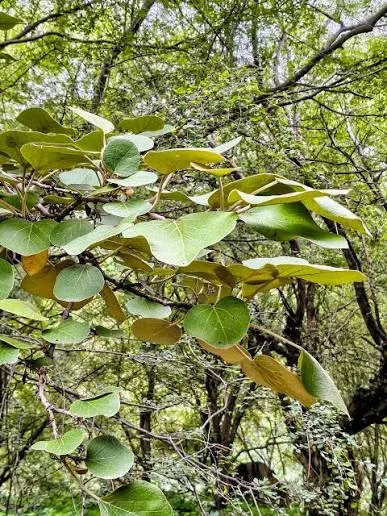
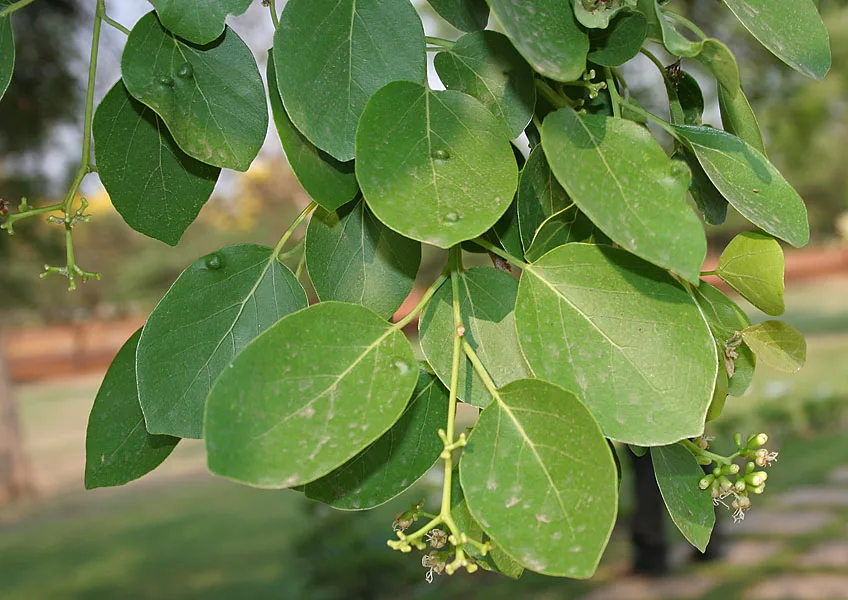
Broadleaf Manjack (referring to its broad, rounded foliage)
Spotted Cordia (referring to its speckled bark and floral cups)
Indian Writing Leaf Tree (describing its unique leaf oxidation behavior)
In scientific literature and international forestry databases, it is cataloged exclusively under its binomial name, Cordia macleodii.
The "Sitapatra" Mystery: Why Does Writing Appear on Dahiman Leaves?
The defining botanical signature of the Dahiman plant is its natural writing reaction:
When you write on the upper leaf surface using a fingernail, twig, or blunt stylus without ink, the localized pressure ruptures cellular polyphenol vacuoles. Upon contact with atmospheric oxygen, the plant's natural tannins rapidly oxidize, turning the indented letters into permanent dark brown or pitch-black script within 2 to 5 minutes.
According to Indian forest folklore, Goddess Sita used these leaves as natural parchment during the Ramayana exile, giving rise to its classical name Sitapatra.
Dahiman vs. Dahi Palash vs. True Palash: Clearing Common Confusion
Because vernacular names vary across regional dialects, buyers and botanists frequently mix up these distinct forest trees:
| Identification Feature | Dahiman (Cordia macleodii) | Dahi Palash (Local Dialect Name) | True Palash (Butea monosperma) |
| Botanical Family | Boraginaceae | Boraginaceae (Same as Dahiman) | Fabaceae (Legume family) |
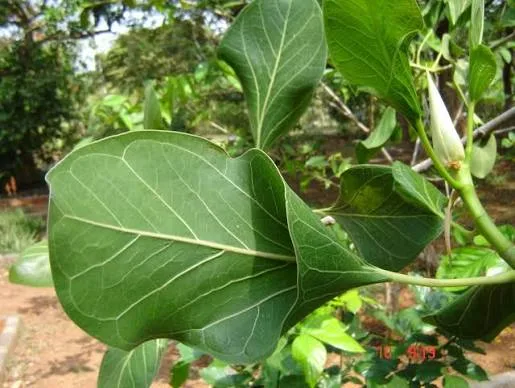
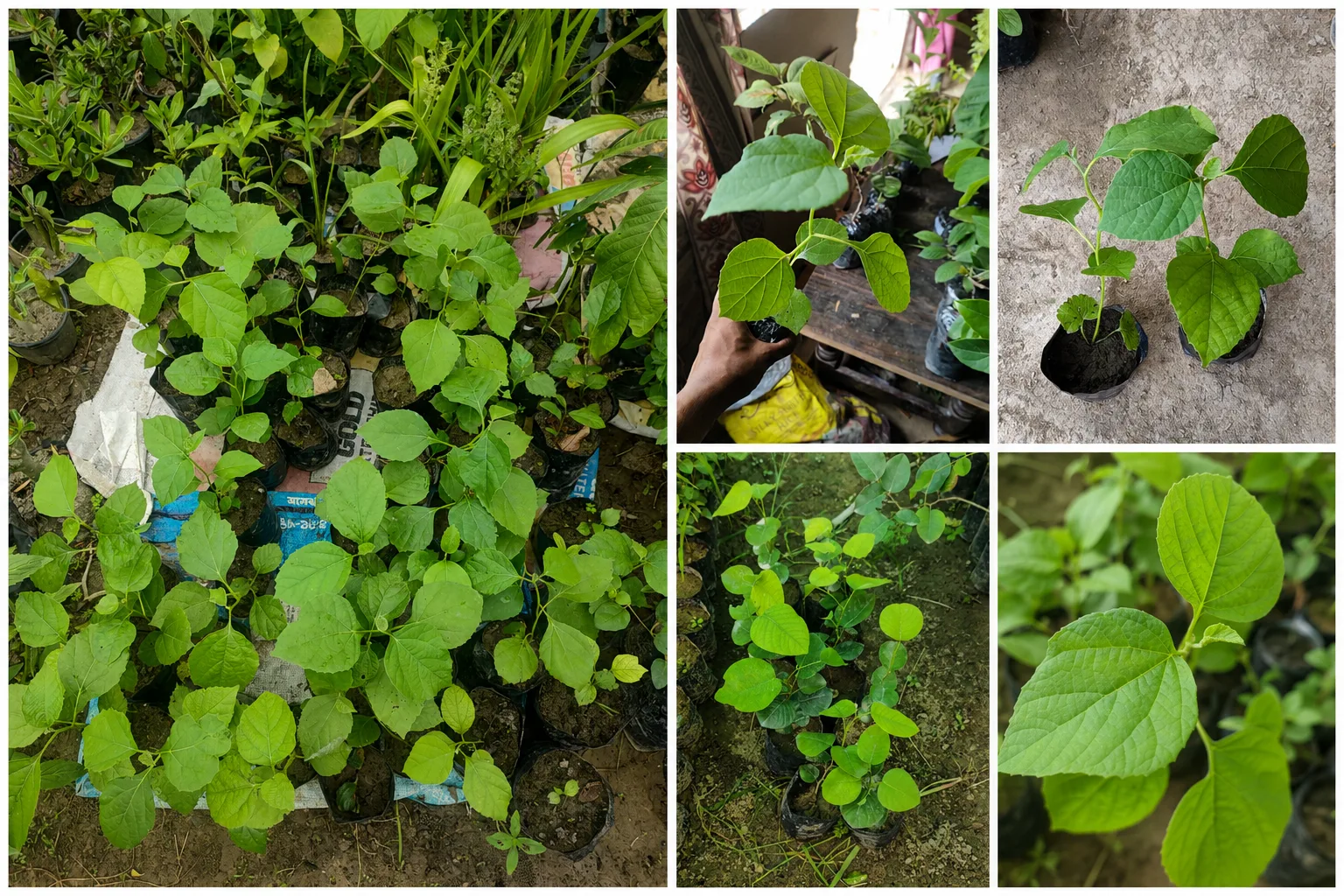
| Leaf Structure | Simple, alternate, sandpapery leaf | Simple, rough leaf | Trifoliate (3 leaflets / Dhaak ke teen paat) |
| Writing Ability | Yes (Turns black upon scratching) | Yes (Regional name for Dahiman) | No (Standard leaf tissue) |
| Flowers | Small, creamy-white to pale yellow | Small, creamy-white | Large, fiery bright orange-red ("Flame of Forest") |
| Primary Forest Use | Wound healing & sacred woodcraft | Ethnomedicinal bark & leaves | Kamarkas resin & natural Holi dye |
Traditional & Ethnobotanical Uses of Dahiman (Cordia macleodii)
1. Rapid Wound Healing & Antiseptic Poultice
Tribal communities across central India crush fresh, velvety Dahiman leaves into a poultice applied directly over cuts and abrasions. The high concentration of natural tannins acts as an astringent, helping halt minor bleeding and promote skin regeneration.
2. Dahiman Ki Chaal (Bark) in Folk Medicine
The pale, soft corky bark (Dahiman ki chaal) is traditionally simmered into decoctions to help soothe internal heat, support liver health during sluggish digestion, and balance systemic inflammation.
3. Sacred Rural Woodcraft & Folklore
Due to its dense, fine-grained wood, Dahiman branches are carved into traditional walking sticks (believed in village folklore to keep snakes away during forest treks) and mathani (curd churners believed to impart cooling qualities to summer buttermilk).
How to Grow Dahiman from Seeds & Cuttings
Sunlight Requirements: Requires full, direct sunlight (at least 6 hours daily) for strong wood density and thick foliage.
Soil & Drainage: Adapts to rocky, sandy loam and dry gravelly soils with a pH between 6.5 and 7.8. Avoid heavy, waterlogged clay.
Seed Germination Protocol: Clean the hard outer drupe, soak seeds in lukewarm water for 24 hours, and plant in a gritty nursery mix (1:1 sand and garden soil). Germination occurs in 20 to 35 days.
Watering: Deep, infrequent watering. Highly drought-resilient once the primary taproot is established.
Sourcing Genuine Dahiman Plant & Seeds Online
Because Cordia macleodii is often confused with common species like Cordia dichotoma (Lasoda) or Butea monosperma (Palash), ensure your nursery provides verified specimens with the signature rough foliage and diagnostic writing capability.