Kushwaha Herbs & Plants
© 2026 Kushwaha Herbs & Plants. Botanical Heritage Platform.

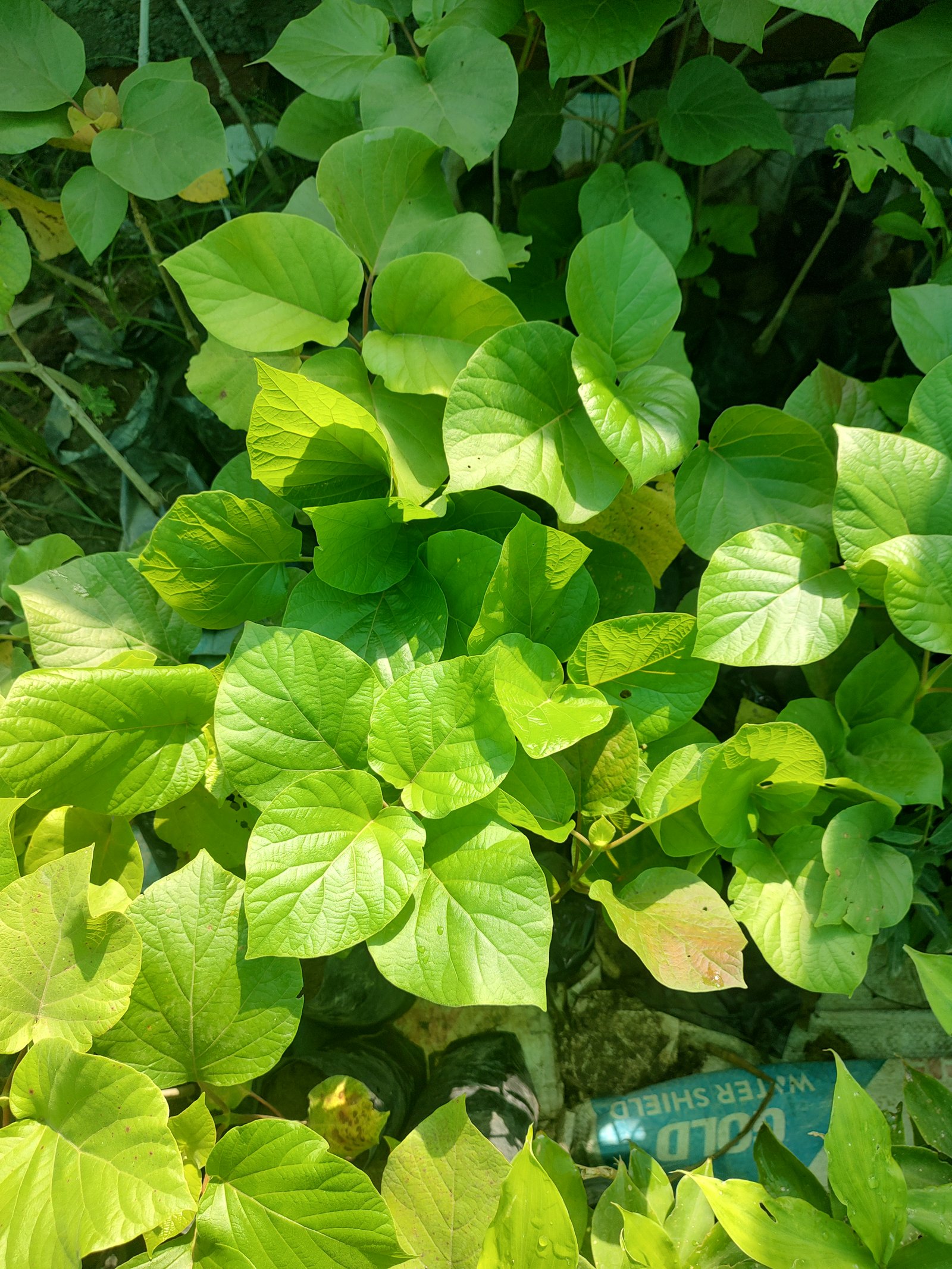
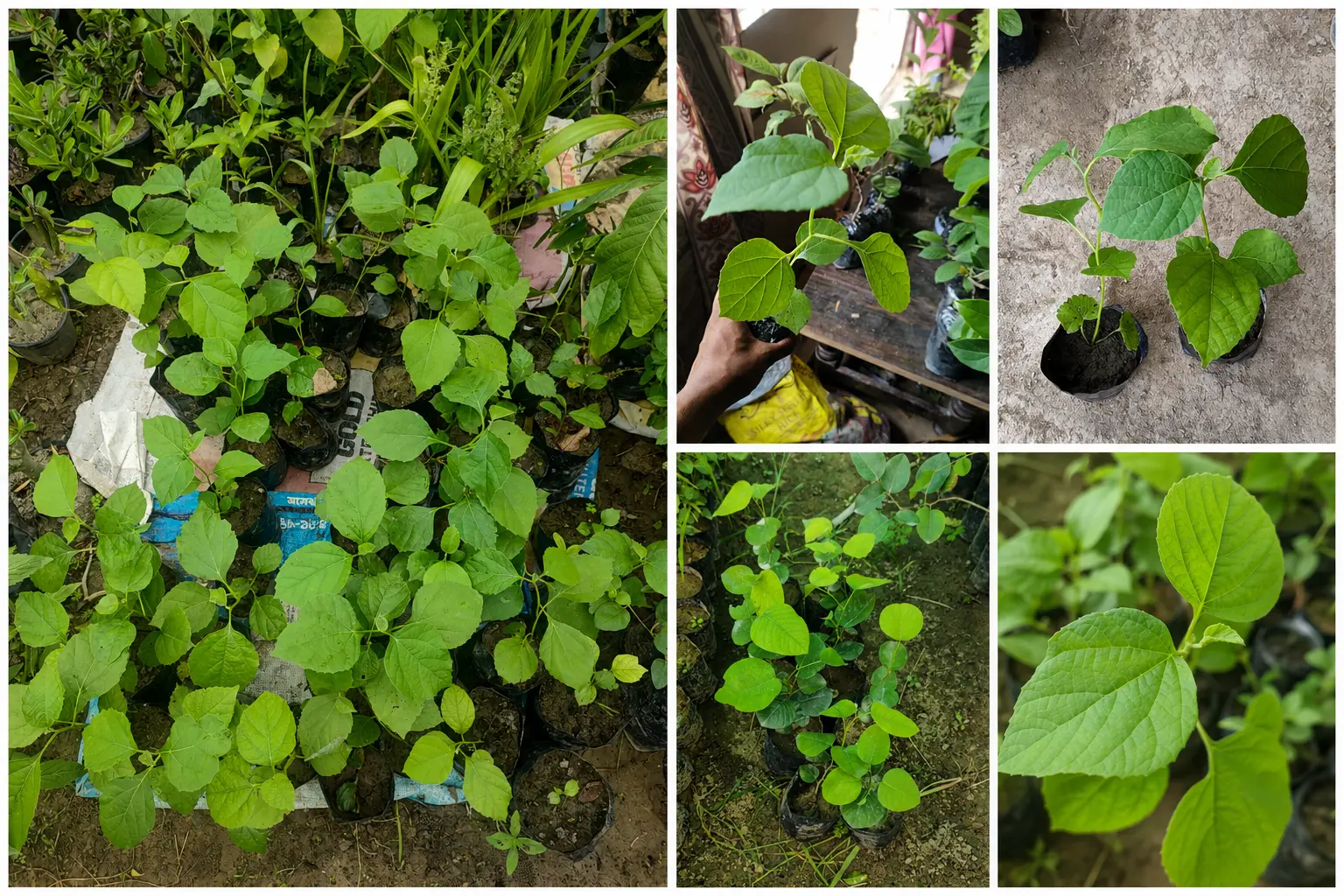
Dambel Plant

Tylophora indica (Burm.f.) Merr.

Sanskrit (Ayurvedic) Antamūla (अन्तमूल), Arkapatri
Hindi Vernacular दम्बेल, अन्तमूल
English Common Indian Ipecac, Emetic Swallowwort

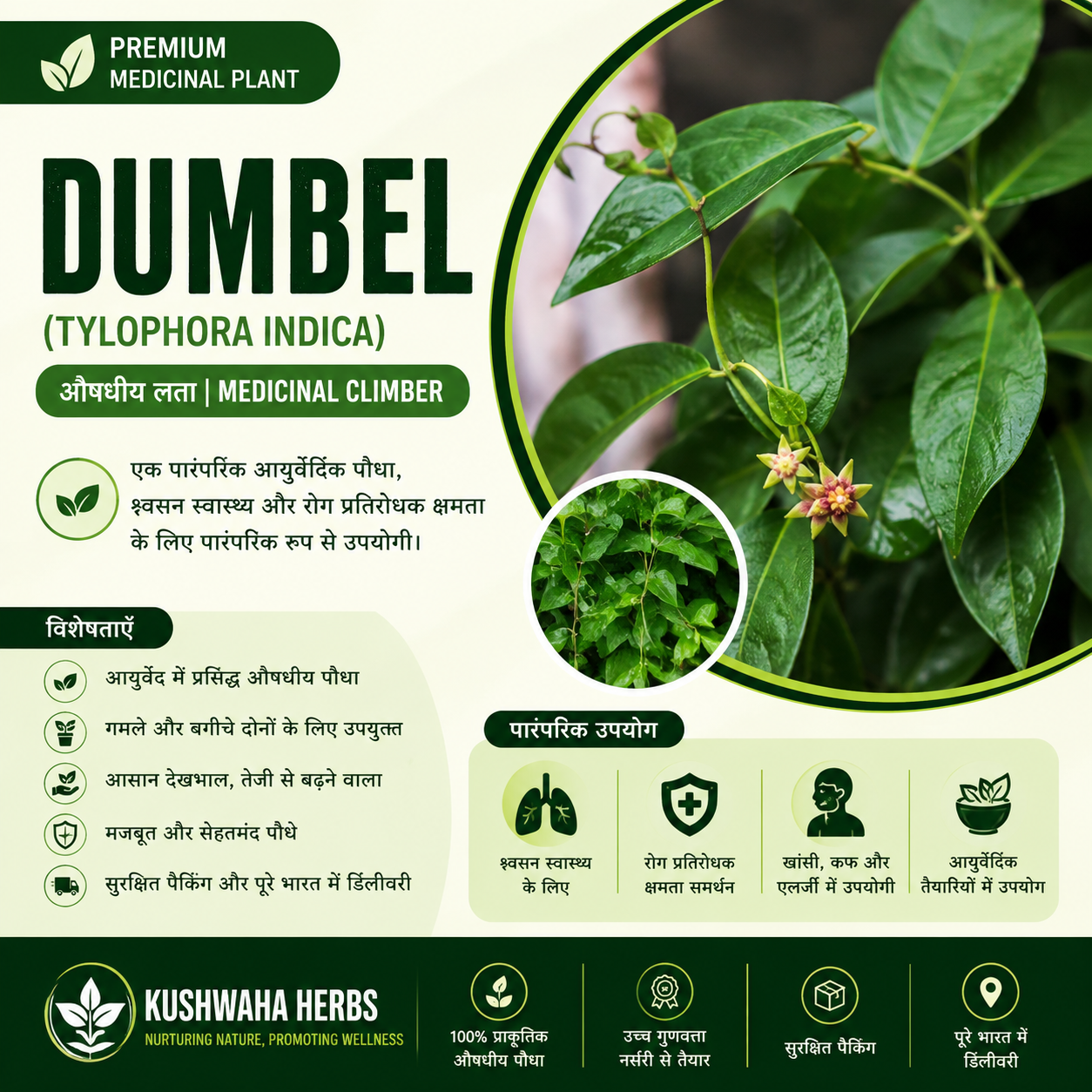
Dambel (Tylophora indica) is a perennial medicinal climbing plant widely recognized in Ayurveda. Traditionally cultivated for its leaves and roots, it is valued for respiratory wellness and herbal formulations. This easy-to-grow vine is suitable for home herbal gardens and medicinal plant collections.
Sunlight: Partial Shade to Full Sun
Water: Moderate (keep soil evenly moist, avoid waterlogging)
Height: 2–5 m (with support)
In Stock
Pan India Delivery Available
Order on WhatsApp Order
Price
₹150
Plant Age
6 Months
Dispatch In
3-5 Days
Height
2–5 m (with support)

1. Botanical Identity & Taxonomy

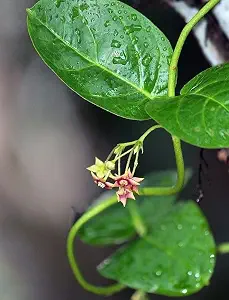
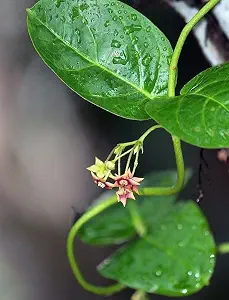
Dambel (Tylophora indica) is a perennial twining medicinal climber belonging to the family Apocynaceae. It has slender green stems with opposite, simple, ovate to elliptic leaves having entire margins. The plant bears small greenish-yellow to purplish star-shaped flowers in axillary clusters, followed by paired slender follicles containing numerous flat seeds with silky tufts. It is widely cultivated in herbal gardens and is valued for its attractive foliage and traditional medicinal importance.

Native Region Native to the Indian subcontinent and Sri Lanka. Commonly found in tropical and subtropical forests, especially in moist deciduous regions. Thrives in warm, humid climates with moderate rainfall and grows well in well-drained soils under partial shade to full sun.
Growth Habit Moderate
Fruiting Period October–January
Flowering Period July–October
Conservation Status Least Concern

2. Traditional Ayurvedic Profile (Dravyaguna)

Dravyaguna Energetics & Pharmacodynamics
Rasa (Taste) Tikta (Bitter), Katu (Pungent)
Guna (Qualities) Laghu (Light), Ruksha (Dry)
Virya (Potency) Ushna (Heating)
Vipaka (Post-Digestive) Katu (Pungent)
Prabhava (Specific Action) Shwasahara, Kaphahara, Krimighna (traditionally described)
Parts Used: Leaf Root
Preparation Methods: Decoction (Kwath) Powder (Churna) Paste (Kalka) Fresh Juice (Swarasa) Herbal Extract
Ayurvedic & Ethnomedicinal Narrative:

Dambel (Tylophora indica) has been traditionally used in Ayurveda, Siddha, and various folk medicine systems across India. The leaves and roots are valued in traditional herbal preparations for supporting respiratory health, seasonal wellness, and general immune balance. The plant has also been used historically in herbal formulations intended to promote healthy breathing, digestive comfort, and overall vitality. In many rural communities, Dambel continues to be cultivated as a medicinal climber for home herbal gardens and traditional wellness practices. These uses are based on traditional knowledge and should not be considered a substitute for professional medical advice.

Classical Pharmacopoeia References: Bhavaprakasha Nighantu • Raja Nighantu • Siddha Materia Medica • Indian Medicinal Plants (Kirtikar & Basu) • Wealth of India (CSIR) • Ayurvedic Pharmacopoeia of India (where applicable)

3. Modern Phytochemistry & Phytotherapy Classification
Major Isolated Bioactive Phytochemicals:
Tylophorine, Tylophorinine, Tylophorinidine, Septicine, Isotylocrebrine, Tylophorinicine, Phenanthroindolizidine alkaloids, Flavonoids, Tannins, Saponins, Phenolic compounds
Demonstrated Pharmacological Activities:
Anti-inflammatory, Immunomodulatory, Antioxidant, Antimicrobial, Antiasthmatic (preclinical), Antiallergic (preclinical), Bronchodilatory potential, Hepatoprotective, Anticancer (in vitro), Analgesic
Medicinal Actions: Anti-inflammatory Antioxidant Antimicrobial Analgesic Hepatoprotective Immunomodulatory Expectorant Bronchodilator Antiallergic Antiasthmatic (Traditional) Antitussive
Body Systems: Digestive System Respiratory System Immune System Liver & Hepatic
Target Health Conditions: Asthma Cough & Cold Allergic Rhinitis Seasonal Allergy Bronchitis
Evidence Level Ratings
★★★★ Traditional Ayurveda ★★★☆ Animal Studies ★★☆☆ In vitro Evidence ★☆☆☆ Human Clinical Trials
Medicinal Use Caution: Preliminary experimental and ethnomedicinal evidence suggests potential properties. More human clinical studies are required before therapeutic use can be recommended.
Dambel Plant
Dambel Plant

4. Horticultural & Propagation Guide

Sunlight Exposure
Partial Shade to Full Sun
Water Requirement
Moderate (keep soil evenly moist, avoid waterlogging)
Soil & Substrate
Well-drained loamy soil, rich in organic...

5. Toxicology, Precautions & Safety Parameters

Pharmacovigilance Profile
Pregnancy Safety Status Avoid
Lactation Safety Status Avoid
Clinical Dosage Range No universally accepted clinical dosage has been established. Dosage should be determined only by a qualified Ayurvedic physician based on the formulation, patient age, and clinical condition.
Clinical Contraindications
• Pregnancy and breastfeeding unless prescribed by a qualified healthcare practitioner.
• Children without medical supervision.
• Individuals with known hypersensitivity to Tylophora species.
• Persons with severe liver or kidney disorders unless advised by a physician.
• Individuals taking immunosuppressive or other prescription medications should consult their healthcare provider before use.
Known Herb-Drug Interactions
Potential interactions with immunomodulatory or immunosuppressive medications have been suggested based on experimental studies. Use cautiously with prescription medicines and consult a healthcare professional before combining with other herbal or pharmaceutical products.
Botanical Medical Disclaimer & Precautions
Tylophora indica is a traditionally used medicinal plant and should be consumed only under the guidance of a qualified Ayurvedic physician or healthcare professional. Excessive intake may cause nausea, vomiting, abdominal discomfort, or dizziness. Self-medication, prolonged use, or use in high doses is not recommended. The information provided is for educational purposes only and should not be considered medical advice or a substitute for professional diagnosis or treatment.

🎥 Botanical Video Documentary

Dambel Plant Video Documentary
💡 Watch detailed field identification, Ayurvedic preparation methods, and medicinal uses of Dambel Plant.

7. Frequently Asked Questions

Dambel Plant (Tylophora indica) is a perennial medicinal climber belonging to the family Apocynaceae. It is traditionally valued in Ayurveda and is commonly grown in herbal gardens across India.

The scientific name of Dambel Plant is Tylophora indica (Burm.f.) Merr.

In traditional Ayurvedic and folk medicine, Dambel has been used in herbal formulations supporting respiratory wellness, immune balance, and overall health. These traditional uses are not equivalent to clinically proven medical treatments.

Yes. Dambel is a low-maintenance medicinal climber that grows well in warm climates with well-drained soil and moderate watering.

Yes. Dambel is a common regional name for Tylophora indica, a medicinal climbing plant belonging to the Apocynaceae family.

8. Scientific Literature Citations

Tylophora indica (Burm.f.) Merr.: A Review on Pharmacognosy, Phytochemistry and Pharmacological Activities
Journal
Authors: Pharmacognosy Reviews ()
Medicinal Plants of India – Tylophora indica
PubMed
Authors: CSIR – The Wealth of India ()
Indian Medicinal Plants
Book
Authors: Kirtikar & Basu ()
Ayurvedic Pharmacopoeia of India
AYUSH
Authors: Ministry of AYUSH ()
Cite This Botanical Record
Kushwaha Plants (2026). Dambel Plant (Tylophora indica (Burm.f.) Merr.) Botanical Monograph. Kushwaha Botanical Heritage Platform. https://kushwahaplants.com/plant/dambel-plant-tylophora-indica